In the rapidly evolving landscape of longevity and performance science, few topics have generated as much interest as molecular hydrogen. If you have been exploring the worlds of biohacking, athletic recovery, or cognitive wellness, you have likely encountered terms like "H2," "hydrogen-rich water," and "molecular hydrogen" used almost interchangeably. However, for the discerning individual looking to optimize their health, understanding the nuance between the active molecule and the delivery medium is essential.
At first glance, the distinction might seem academic. After all, if you are drinking hydrogen water, you are consuming molecular hydrogen, right? While technically true, the difference lies in the stability and the freshness of how that hydrogen is delivered to your cells. As we dive into the science, we will explore why the "what" (molecular hydrogen) is the hero, but the "how" (the method of creating hydrogen water) determines whether you actually experience the potential benefits suggested by the research.
What is Molecular Hydrogen (H2)?
Molecular hydrogen, or H2, is a tasteless, odorless, and colorless gas. It is the smallest molecule in the universe, consisting of just two hydrogen atoms bonded together. Because of its infinitesimal size, H2 possesses a unique ability that many larger antioxidants do not: it can easily permeate cell membranes and diffuse into sub-cellular compartments like the mitochondria and the nucleus.
A Unique Selective Antioxidant
Research suggests that molecular hydrogen may function as a "selective" antioxidant. Unlike traditional antioxidants that may indiscriminately neutralize all free radicals—including those that play necessary roles in cellular signaling—studies indicate that H2 specifically targets the most cytotoxic (cell-damaging) radicals, such as the hydroxyl radical (OH). By supporting the body's natural balance without interfering with essential signaling molecules, H2 may help maintain cellular homeostasis.
The Bioavailability Advantage
Because H2 is so small, it can cross the blood-brain barrier, a feat that many supplements struggle to achieve. This has led researchers to investigate its potential role in supporting cognitive resilience and neurological health. When we talk about the benefits of "hydrogen water," we are really talking about the biological activity of this tiny gas dissolved within it.
What is Hydrogen Water?
Hydrogen water is simply purified water that has been infused with extra molecular hydrogen gas. It is not a different chemical compound; the water molecules (H2O) remain unchanged. Instead, the H2 gas is dissolved into the spaces between the water molecules, much like carbon dioxide is dissolved in carbonated water to create bubbles.
The Challenge of Solubility
Hydrogen is a "hydrophobic" gas, meaning it does not naturally want to stay dissolved in water. Under normal atmospheric pressure, the maximum amount of hydrogen that can stay dissolved in water (the saturation point) is approximately 1.6 parts per million (ppm) or 1.6 mg/L. To achieve higher concentrations, specialized technology or high-pressure environments are required.
This is where the distinction becomes critical for consumers. Not all hydrogen water is created equal. Pre-packaged bottles or low-quality machines often struggle to maintain even the baseline saturation level, as the tiny H2 molecules can actually leak through plastic and even some glass containers over time.
The Active Ingredient vs. The Delivery System
To understand the relationship between molecular hydrogen and hydrogen water, it is helpful to use an analogy. Think of molecular hydrogen as the "active ingredient" (like Vitamin C) and hydrogen water as the "delivery vehicle" (like a glass of orange juice). The water is merely the medium used to transport the H2 into your system.
How Much Does Concentration Actually Matter?
It is worth being straight about this, because the industry is not. The foundational human studies on hydrogen-rich water — the ones the whole field is built on — used water in the range of roughly 0.5 to 1.3 ppm. These are modest concentrations, not extreme ones. So the interesting question is not who prints the biggest number on the package; it is whether the hydrogen is still dissolved in the glass by the time you drink it. We look at this in more detail in what concentration in hydrogen water really tells you.
That is the practical case for hydrogen tablets: the gas is released into your glass at the moment of consumption, rather than having sat in a container losing hydrogen since the day it was filled.
How Molecular Hydrogen May Support Your Wellness Goals
While research is ongoing, hundreds of peer-reviewed studies have explored the potential applications of H2. By acting on a cellular level, molecular hydrogen may support several key areas of health and vitality.
Support for Exercise Recovery
Athletes and active adults often turn to H2 to manage the oxidative stress that naturally occurs during intense physical activity. Preliminary studies suggest that drinking hydrogen-rich water before or after exercise may help reduce muscle fatigue and support a healthy inflammatory response following strenuous workouts. By mitigating excessive oxidative stress, H2 may help you get back to your training faster.
Cognitive Clarity and Brain Health
The brain is highly susceptible to oxidative stress due to its high oxygen consumption. Because H2 can cross the blood-brain barrier, researchers are investigating how it may support mental clarity and long-term cognitive resilience. Some studies indicate that H2 may help protect neurons from oxidative damage, potentially supporting focus and mood stability. To learn more about this, you can read about the science of hydrogen-rich water and cellular wellness.
Metabolic and Longevity Support
Metabolic health is the foundation of longevity. Research suggests that molecular hydrogen may support healthy lipid and glucose metabolism. By promoting mitochondrial efficiency—the "powerhouses" of our cells—H2 may play a role in maintaining energy levels and vitality as we age. At HALE, our approach to science is rooted in these foundational biological mechanisms, ensuring that our products align with the latest peer-reviewed findings.
Choosing the Right Method: Tablets vs. Machines vs. Bottles
If you have decided to incorporate molecular hydrogen into your routine, you are faced with several choices. Each method has its pros and cons regarding concentration, convenience, and cost.
- Pre-bottled Hydrogen Water: Convenient but often expensive and prone to low H2 levels due to gas leakage during shipping and storage.
- Hydrogen Water Machines (Ionizers): These can be a significant upfront investment. They provide an unlimited supply, but household units vary widely in how much hydrogen they actually dissolve, and they require frequent maintenance to prevent mineral buildup on the electrodes.
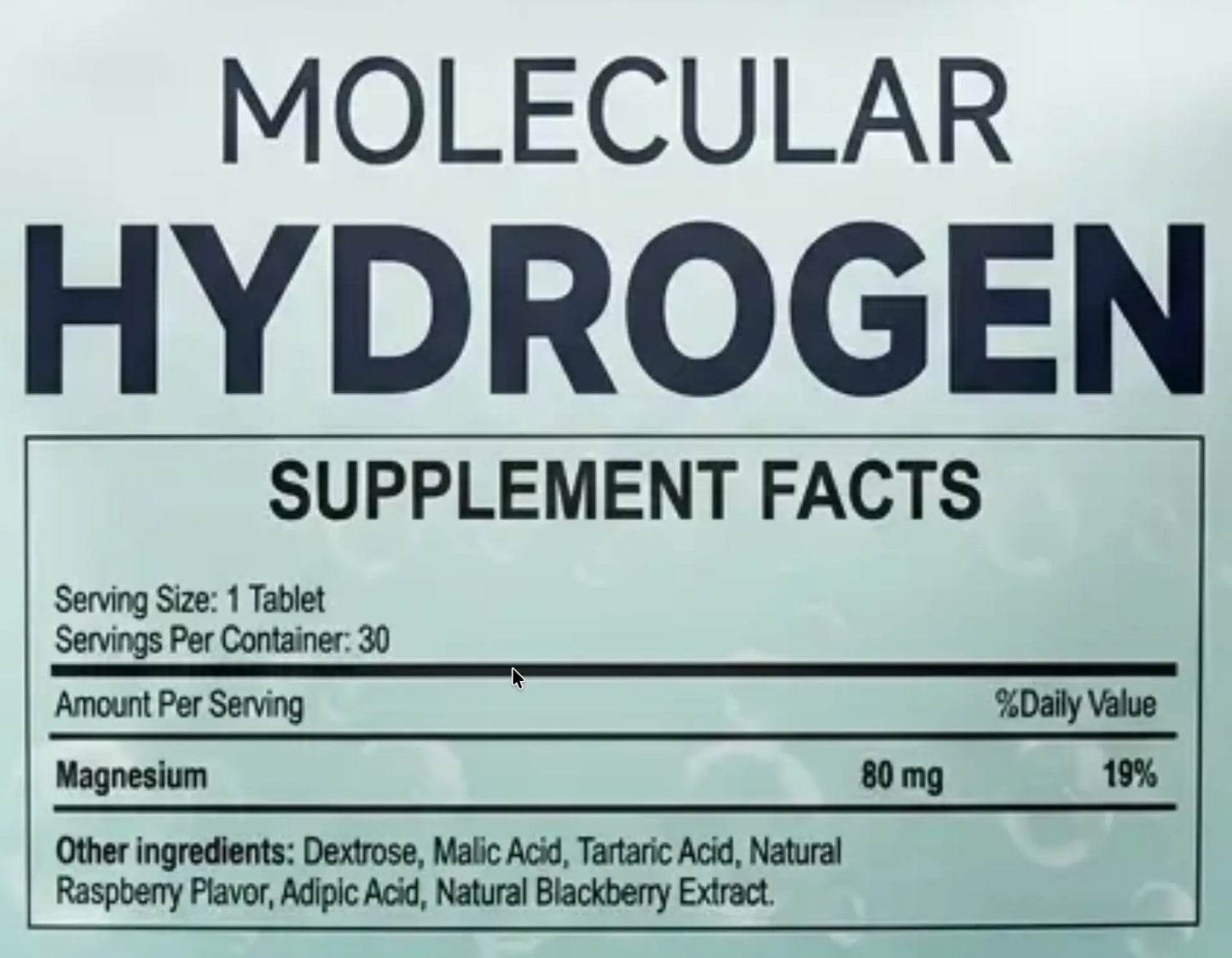
- Molecular Hydrogen Tablets: HALE molecular hydrogen tablets are portable and need no equipment. When dropped into a glass of water, they react to release H2 gas into the water in front of you. HALE tablets are specified to generate 12 PPM per tablet in 8-12 oz of water — the same figure printed on the pouch. Worth knowing: most tablet brands declare something in the 8-16 PPM range, so a number in that band is the norm for this format rather than a point of difference.
The HALE Research Team reviews new data as it is published, including the studies that report no effect. We would rather tell you where the evidence is thin than imply more than it says.
Conclusion: The Future of Cellular Wellness
The distinction between molecular hydrogen and hydrogen water is simple: one is the active molecule, and the other is the way it reaches you. Understanding that the water is only the vehicle — and that the hydrogen escapes from it steadily — tells you more about choosing a method than any number on a label.
Whether you are interested in recovery, mental clarity, or general cellular wellness, molecular hydrogen is an area of genuine and ongoing research. Choosing a method that puts the gas in your glass fresh, such as H2 tablets, is the part of the decision that is actually within your control.
Frequently Asked Questions
Does hydrogen water taste different than regular water?
No. Molecular hydrogen is a tasteless and odorless gas. While the process of creating hydrogen water (especially with tablets) may slightly alter the "mouthfeel" due to the presence of millions of tiny bubbles, the flavor remains neutral, just like your standard drinking water.
How long does the hydrogen stay in the water?
Because H2 is the smallest molecule, it wants to escape back into the atmosphere. In an open glass, most of the hydrogen will dissipate within 15 to 30 minutes. For the best results, it is recommended to drink the water immediately after the tablet has dissolved or the infusion process is complete.
Can I drink too much molecular hydrogen?
Molecular hydrogen has an excellent safety profile. It has been used in deep-sea diving gas mixes for decades at much higher concentrations than what is found in water. Any excess H2 that your body does not use is simply exhaled through your breath. However, as with any supplement, it is best to follow the recommended usage on the product label.
Is there a specific time of day to drink hydrogen water?
While you can enjoy the benefits of H2 at any time, many people find it particularly useful in the morning for cognitive clarity, or around their workout window to support physical recovery. Some also prefer drinking it during periods of high stress or travel to support their immune system and cellular resilience.
Do I need to use special water for hydrogen tablets?
HALE tablets work with most types of water, including filtered, spring, and reverse osmosis water. However, the reaction is often most efficient in room-temperature water. Extremely cold water may slow down the dissolution process slightly, while very hot water may cause the gas to escape more quickly.
Sources
- Ohsawa et al., Nature Medicine, 2007
- Endothelial function with water over 7 ppm dissolved hydrogen, 2020
- Oral administration of hydrogen-rich water: a 2025 review
Disclaimer: These statements have not been evaluated by the Food and Drug Administration. HALE products are not intended to diagnose, treat, cure, or prevent any disease. Always consult a qualified healthcare provider before starting any new supplement, especially if you have a medical condition or are taking medication.