The Evolution of Functional Hydration
For decades, the health-conscious community focused primarily on hydration through the lens of volume and electrolytes. However, as our understanding of cellular biology has deepened, the conversation has shifted toward functional hydration—water that serves as a delivery vehicle for bioactive molecules. Among these, molecular hydrogen (H2) has emerged as a focal point of scientific inquiry. But as the market for hydrogen-enriched water grows, a critical question arises: why does the concentration of hydrogen matter so much?
Molecular hydrogen is the smallest molecule in the universe. This unique physical property allows it to diffuse rapidly through cell membranes and enter sub-cellular compartments like the mitochondria and the nucleus. Yet, research suggests that simply having hydrogen present in water may not be enough to elicit a physiological response. To potentially influence cellular pathways, a specific threshold of concentration—often measured in parts per million (ppm)—must be achieved. This article explores what those concentration figures mean in practice — and, just as importantly, what they do not mean.
The Science of Bioavailability and Diffusion
The primary reason high concentration is vital lies in the laws of physics, specifically gas diffusion. Because H2 is so small, it does not stay dissolved in water indefinitely; it naturally wants to escape into the atmosphere. When you consume hydrogen-rich water, the H2 must travel from your digestive tract into your bloodstream and eventually into your cells. This process relies on a concentration gradient.
A higher concentration of H2 in the water creates a stronger pressure gradient, which studies indicate may facilitate more efficient diffusion into the tissues. If the concentration is too low, the molecule may dissipate before it can reach the areas where it is needed most. By using how molecular hydrogen selectively targets oxidative stress as a framework, we can see that the goal is to saturate the system briefly but intensely to trigger cellular signaling.
The Importance of Parts Per Million (PPM)
In the world of molecular hydrogen, the standard unit of measurement is parts per million (ppm). The foundational clinical studies used concentrations in the region of 0.5 to 1.3 ppm, and still reported measurable effects — a useful corrective to the idea that only very high numbers count. What concentration does buy you is headroom: hydrogen starts escaping into the air the moment it is generated, so beginning above saturation means a meaningful amount is still dissolved by the time you finish the glass.
Dose and Response: What the Evidence Actually Shows
In pharmacology and nutrition, the "dose-response relationship" describes how the magnitude of a response changes as the dose of a substance increases. It is tempting to assume hydrogen behaves the same way, but the human evidence does not currently establish it. The trials that built this field ran at roughly 0.5 to 1.3 ppm and reported effects at those levels; there is no body of clinical work showing that a far larger figure delivers proportionally more. Anyone selling you a tablet on the strength of a big number is going beyond what the research supports.
Research suggests that H2 acts as a selective antioxidant. Unlike traditional antioxidants that may neutralize all free radicals (including those the body needs for signaling), molecular hydrogen appears to target only the most cytotoxic radicals, such as the hydroxyl radical. To achieve this selective action effectively, the body requires a sufficient "dosage" of H2 molecules to be present in the intracellular environment. This is one reason many people prefer HALE molecular hydrogen tablets to equipment: the reaction happens in the glass, seconds before you drink it.
The Journey Through the Stomach
When you drink hydrogen water, the gas has to survive transit through the stomach before it can be absorbed in the small intestine, and some is lost along the way. This is one of the practical reasons tablets start above the saturation point — not to chase a large label figure, but to account for the losses that happen between the glass and the bloodstream.
Efficiency, Convenience, and Delivery Methods
There are several ways to ingest molecular hydrogen, ranging from expensive ionizer machines to pre-packaged cans. However, not all methods are created equal when it comes to concentration. Ionizer output varies a great deal with the unit, the water and the condition of the electrodes, which makes it hard to know what you are getting on any given day. Pre-packaged waters can also suffer from gas leakage through the container walls over time.
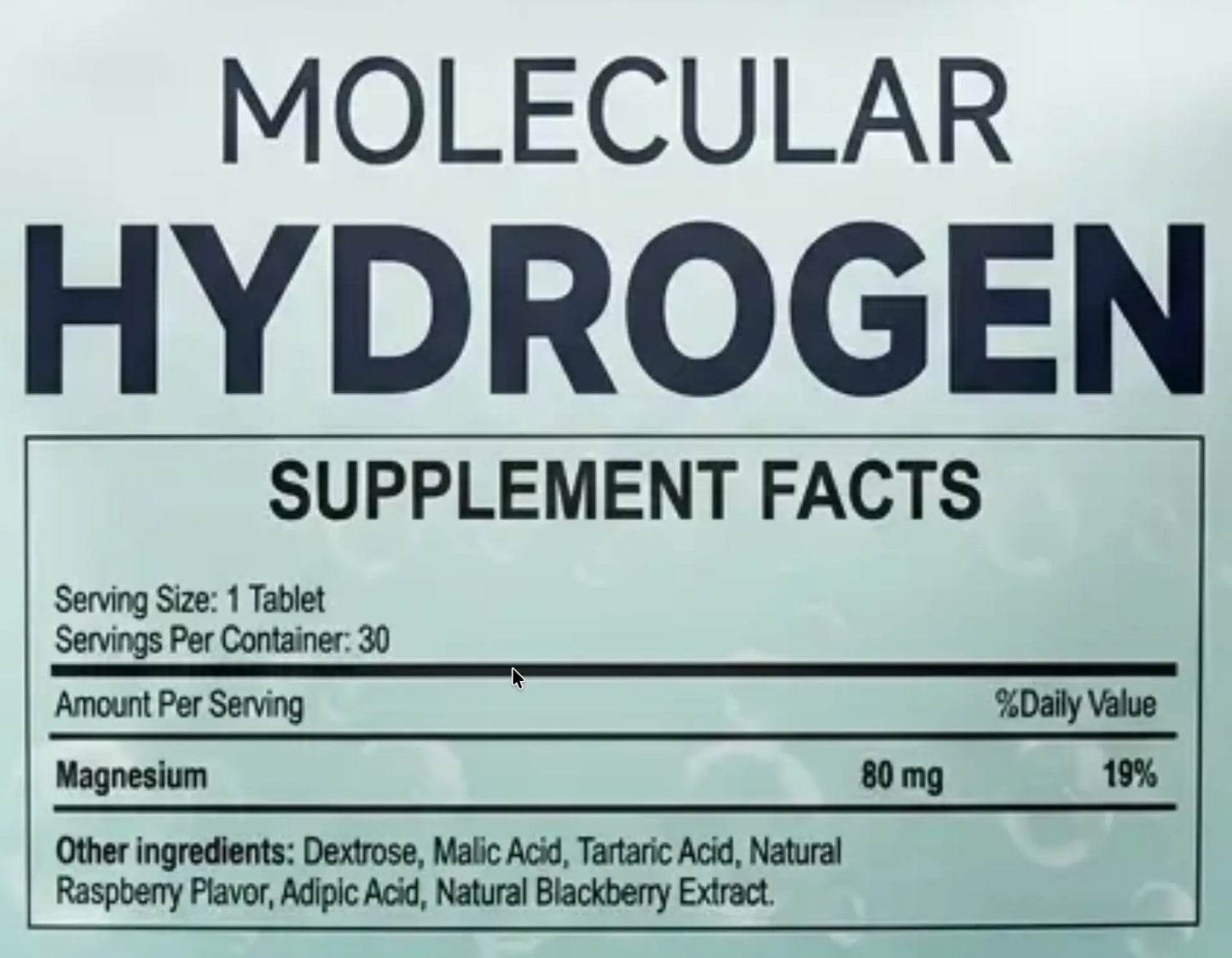
This is where hydrogen tablets offer a distinct advantage. By creating a chemical reaction directly in the glass, these tablets generate their gas fresh, at the moment of drinking. Each HALE tablet is formulated to generate 12 PPM of H2 in 8-12 oz of water — a level of saturation that is difficult to hold in a sealed container for any length of time. For individuals focused on why high-concentration hydrogen water matters, the ability to create a fresh, potent serving anywhere is a significant benefit.
The Role of the HALE Research Team
At HALE, we prioritize transparency and scientific integrity, which sometimes means saying things that do not help us sell. Our HALE Research Team reviews the literature as it is published, including the trials that report no effect. We would rather you understood the limits of the evidence than bought on the strength of a number we cannot justify.
Supporting Longevity and Recovery
The interest in high-concentration H2 is particularly strong among those interested in longevity and athletic recovery. Oxidative stress is a primary driver of the aging process and muscle fatigue. By supporting the body's internal antioxidant enzymes—such as glutathione and superoxide dismutase—molecular hydrogen may help maintain cellular resilience over time.
For athletes, the rapid diffusion of high-concentration H2 may support a healthy inflammatory response following intense exercise. Studies indicate that drinking hydrogen-rich water before or after a workout may support reduced lactate buildup and improved muscle function. To learn more about our commitment to these standards, you can read more about HALE and our approach to science-backed wellness.
Conclusion: What the Number Is Good For
A PPM figure describes what a tablet generates at the moment it reacts. It is a specification, not a measurement of what reaches your cells, and it is not a ranking of products — the tablet category clusters between 8 and 16 PPM, so nearly everyone's number looks impressive. Understanding that lets you ignore the part of the marketing that is noise.
What is left is simpler and more useful. HALE is one tablet a day, dissolved in 8-12 oz of water and drunk once the fizzing has stopped. Consistency across weeks is what the research points to, far more than the size of any single serving.
Frequently Asked Questions
What is considered a "high concentration" of molecular hydrogen?
There is no official regulatory definition, and the term is used loosely across the category. Worth knowing: hydrogen tablets on the market generally declare somewhere between 8 and 16 PPM of generation per tablet, so a high number on a pouch is the norm rather than a differentiator. Each HALE tablet is formulated to generate 12 PPM in 8-12 oz of water.
Is it safe to consume high concentrations of hydrogen gas?
Yes, molecular hydrogen has been studied extensively for safety. It is a natural byproduct of fiber fermentation in the gut. Research suggests that the body can safely handle high concentrations of H2, as any excess gas that isn't used by the cells is simply exhaled through the lungs.
How soon should I drink the water after dissolving a tablet?
To get the maximum benefit of high-concentration H2, you should drink the water within a couple of minutes of the tablet finishing dissolving (the tablet itself takes 3-4 minutes to dissolve; wait until the fizzing stops before drinking). Because H2 is a gas, it will begin to escape from the water and return to the air over time.
Does the temperature of the water affect the hydrogen concentration?
Yes, gas solubility is generally higher in colder water. However, for most high-concentration tablets, room temperature or slightly cool water is ideal for the chemical reaction to occur efficiently while still maintaining a high level of dissolved gas.
Can I get enough hydrogen from a standard water ionizer?
Ionizer output varies with the unit, the water and the state of the electrodes, so it is hard to know what you are actually getting. For those seeking the specific benefits associated with high-dose H2, tablets are often a more reliable way to ensure you are hitting the necessary ppm levels.
Sources
- Ohsawa et al., Nature Medicine, 2007
- Endothelial function with water over 7 ppm dissolved hydrogen, 2020
- Oral administration of hydrogen-rich water: a 2025 review
- Hydrogen-rich water, muscle performance and lactate, 2022
Disclaimer: These statements have not been evaluated by the Food and Drug Administration. HALE products are not intended to diagnose, treat, cure, or prevent any disease. Always consult a qualified healthcare provider before starting any new supplement, especially if you have a medical condition or are taking medication.