The Quest for Cognitive Vitality
We have all experienced those days where the mind feels clouded, as if a thick mist has settled over our thoughts. Whether it is the result of a demanding work week, poor sleep, or the simple accumulation of daily stressors, mental fatigue can significantly impact our productivity and quality of life. For those in the 30-to-55 age bracket, maintaining a sharp edge is not just about performance; it is about longevity and preserving the cognitive resilience required to navigate a complex world.
As we look for ways to support our brain health, molecular hydrogen (H2) has emerged as a compelling subject of scientific inquiry. This tiny, inert gas was once thought to be biologically inactive in humans, but recent research suggests it may play a vital role in supporting cellular wellness. Because of its unique physical properties, molecular hydrogen may offer a novel way to support mental clarity from the inside out. At HALE, our approach to science is rooted in understanding these fundamental cellular mechanisms to help you achieve optimal vitality.
The Smallest Molecule with a Big Mission
The primary challenge in supporting brain health is the blood-brain barrier (BBB). This highly selective semipermeable border is designed to protect the brain from toxins and pathogens, but it also prevents many beneficial antioxidants and nutrients from reaching the neural tissue. This is where molecular hydrogen excels. As the smallest molecule in existence, H2 can effortlessly diffuse across cell membranes and penetrate the blood-brain barrier. Unlike larger antioxidant compounds, hydrogen gas can reach the mitochondria and the nucleus of brain cells, where it may exert its most significant effects.
Understanding Oxidative Stress and Mental Fog
The human brain is an energy-intensive organ. While it accounts for only about 2% of our body weight, it consumes roughly 20% of our total oxygen. This high metabolic rate is necessary for thinking, memory, and focus, but it also results in a significant production of reactive oxygen species (ROS), commonly known as free radicals. When the production of these free radicals outpaces the body’s natural antioxidant defenses, the result is oxidative stress.
Oxidative stress is often linked to that feeling of "brain fog" and general cognitive sluggishness. Research suggests that the brain is particularly vulnerable to oxidative damage due to its high lipid content and relatively low levels of endogenous antioxidants. Molecular hydrogen is unique because it acts as a selective antioxidant. Rather than neutralizing all free radicals—some of which are actually necessary for cellular signaling—H2 specifically targets the most cytotoxic (cell-damaging) radicals, such as the hydroxyl radical.
By helping to maintain a healthy redox balance, H2 may help protect neural pathways from the daily wear and tear of oxidative stress. For a deeper dive into how this process works at a cellular level, you may find our article on molecular hydrogen and selective oxidative stress particularly illuminating.
Mitochondrial Health: The Engine of Focus
Mental clarity is, at its core, an energy problem. If your brain cells (neurons) cannot produce enough ATP—the primary energy currency of the cell—your ability to focus and process information will inevitably decline. The mitochondria are the powerhouses responsible for this energy production, and they are also the primary site where oxidative stress begins.
Studies indicate that molecular hydrogen may support mitochondrial function by protecting the mitochondrial membrane and supporting the electron transport chain. When mitochondria operate efficiently, the brain has a steady supply of energy, which may manifest as improved focus and sustained mental stamina throughout the day. Incorporating HALE molecular hydrogen tablets into your morning routine is a convenient way to deliver a high concentration of H2 to your system when your brain needs that energy most.
Neuro-Inflammation and Cognitive Resilience
Beyond oxidative stress, low-grade, chronic inflammation is another factor that can cloud mental performance. While inflammation is a necessary part of the immune response, an overactive inflammatory state in the brain can interfere with communication between neurons. Research suggests that molecular hydrogen may help modulate the body's inflammatory signaling pathways. By supporting a balanced inflammatory response, H2 may contribute to molecular hydrogen for cognitive resilience, helping the brain remain adaptable and sharp even under pressure.
Molecular Hydrogen and Mood Regulation
It is difficult to have mental clarity when you are feeling overwhelmed or cognitively fatigued. Interestingly, some research has explored the relationship between molecular hydrogen and the regulation of certain neuroprotective hormones, such as ghrelin. Ghrelin is not just a "hunger hormone"; it also has known roles in supporting cognitive function and mood stability. Preliminary studies suggest that hydrogen-rich water may stimulate the secretion of ghrelin, which in turn may support hippocampal function—the area of the brain responsible for learning and memory.
Furthermore, by supporting overall cellular wellness, H2 may help the body manage the physiological markers of stress. When the body is less burdened by cellular stress, the mind is often freer to focus on the tasks at hand. This holistic support is why many users report a sense of "calm focus" after consistent use of hydrogen tablets.
Practical Ways to Support Your Brain with H2
While molecular hydrogen is found in small amounts in some natural springs, the most effective way to experience its potential benefits is through high-concentration hydrogen-rich water. Using H2 tablets allows you to create a fresh, potent dose of molecular hydrogen anywhere you have a glass of water.
To maximize the potential benefits for mental clarity, consider the following:
- Consistency is Key: Like any wellness practice, the benefits of molecular hydrogen are often cumulative. Many people find that drinking hydrogen-rich water daily supports a more consistent level of mental energy.
- Timing Matters: Try taking your H2 in the morning or during the "afternoon slump" to support cognitive focus when you need it most.
- Hydration First: Remember that the brain is roughly 75% water. By using H2 tablets, you are addressing both cellular communication and basic hydration simultaneously.
At HALE, we are committed to transparency and scientific rigor. Our HALE Research Team ensures that every article we publish and every product we develop is grounded in the latest peer-reviewed literature. We believe that by empowering you with high-quality molecular hydrogen, we can help you unlock your potential for a clearer, more focused life.
For more information on the specific benefits of focus and concentration, you can read our focused guide on molecular hydrogen for focus.
Frequently Asked Questions
How long does it take to feel the effects of molecular hydrogen on focus?
While some individuals report a feeling of increased alertness within 15 to 30 minutes of consumption, the effects of molecular hydrogen are often subtle and cumulative. For most people, the most significant support for mental clarity is noticed after 2 to 4 weeks of consistent daily use.
Can I take molecular hydrogen with my morning coffee?
It is best to consume hydrogen-rich water on its own or shortly before your coffee. The H2 gas is most effective when the water is consumed immediately after the tablet has fully dissolved. High temperatures can cause the H2 gas to escape more quickly, so we recommend using room temperature or chilled water.
Is molecular hydrogen safe for daily use?
Yes, molecular hydrogen has an excellent safety profile. It has been used in deep-sea diving gas mixes for decades and has been the subject of hundreds of clinical studies. There is no known toxicity level, as any excess H2 is simply exhaled through the lungs.
Does molecular hydrogen contain caffeine or stimulants?
No, molecular hydrogen is a non-stimulant way to support energy. It works at the cellular level to support mitochondrial function and redox balance, providing a natural feeling of vitality without the jitters or "crash" associated with caffeine or sugar.
How many HALE tablets should I use per day for cognitive support?
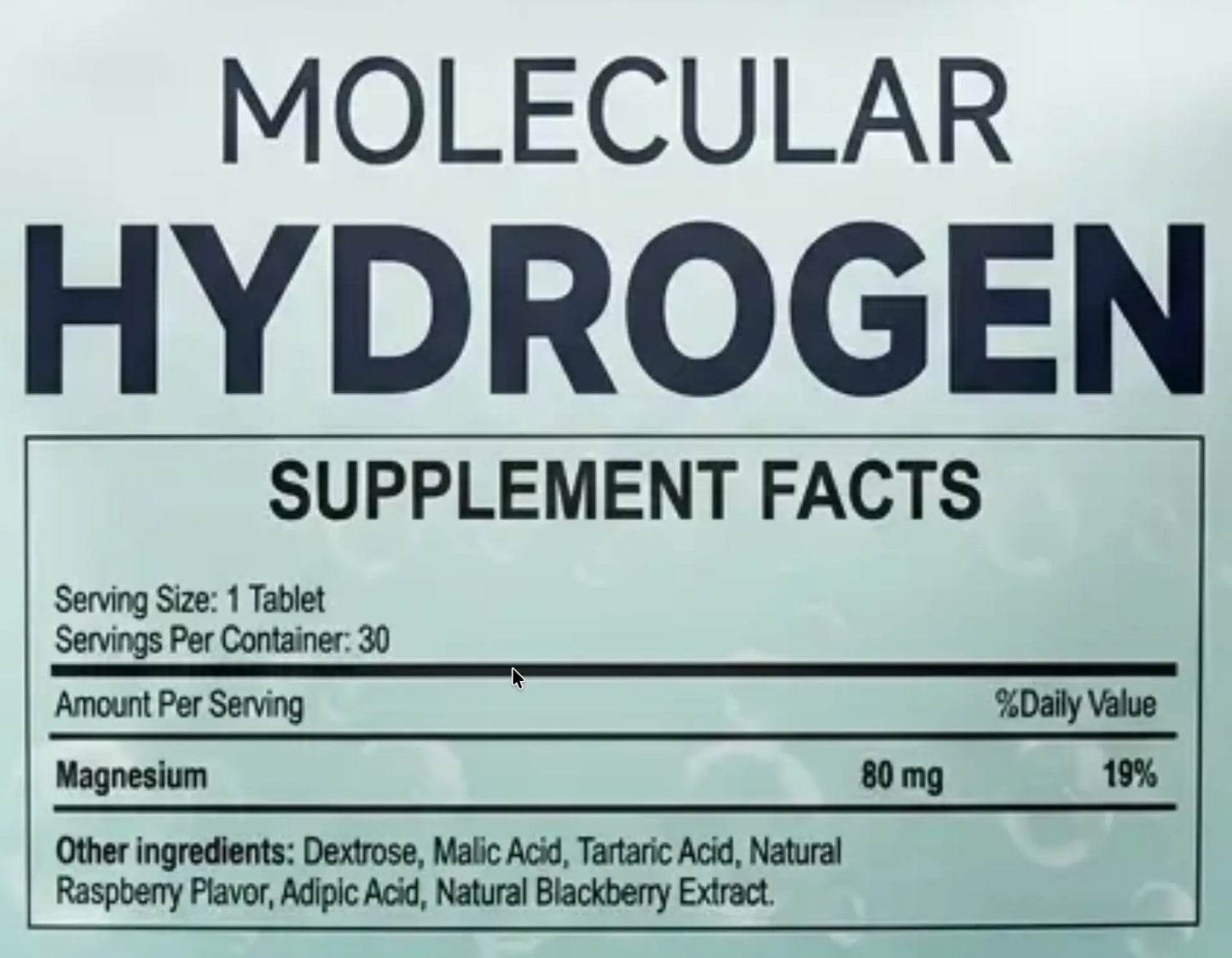
Most research suggests that a concentration of 0.5 to 1.6 ppm (parts per million) of H2 is effective. One HALE tablet per day, fully dissolved in 8-12 oz of water, provides a high-concentration dose that aligns with the levels used in many clinical studies.
Sources
- Ohsawa et al., Nature Medicine, 2007
- Hydrogen-rich water and alertness in sleep-deprived adults, 2021
- Hydrogen-rich water, mood and autonomic function, 2017
Disclaimer: These statements have not been evaluated by the Food and Drug Administration. HALE products are not intended to diagnose, treat, cure, or prevent any disease. Always consult a qualified healthcare provider before starting any new supplement, especially if you have a medical condition or are taking medication.